
Mathematics
Discover how Xingnan Primary School builds strong Maths skills through hands-on learning, problem-solving methods, and enrichment programmes for all levels.
At Xingnan Primary School, our Mathematics curriculum is anchored in the Ministry of Education's Mathematics Framework, which places mathematical problem-solving at its core. Our approach goes beyond procedural fluency; we nurture confident, self-directed learners who are equipped with 21st Century Competencies (21CC) to apply Mathematics meaningfully in everyday life and beyond.
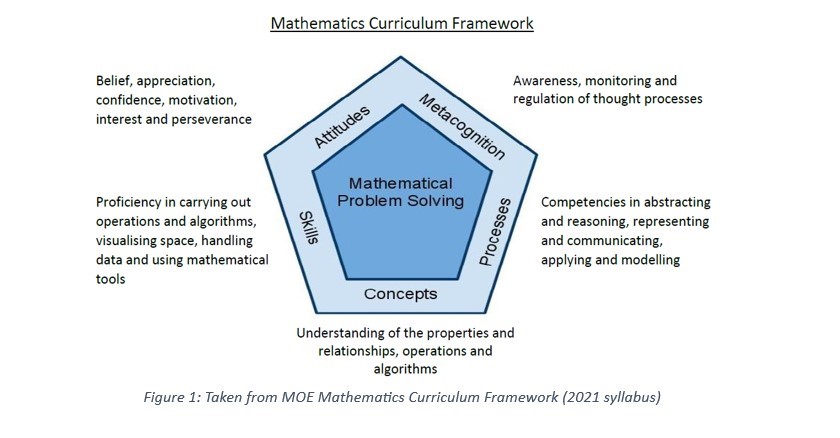
Key Approaches
Our Mathematics lessons are designed to spark curiosity, build deep understanding of mathematical concepts, and develop confident problem solvers at every level. Through our Mathematics curriculum, students develop key Emerging 21st Century Competencies (e21CC) that prepare them for the complexities of the future. Our problem-solving approaches and inquiry-based programmes build Critical, Adaptive and Inventive Thinking, as students learn to reason soundly, reflect on their thinking, and tackle open-ended challenges with creativity and resilience. As students discuss mathematical ideas, collaborate on tasks, and use technology purposefully, they strengthen their Communication, Collaboration and Information Skills.
Concrete-Pictorial-Abstract (CPA) Approach
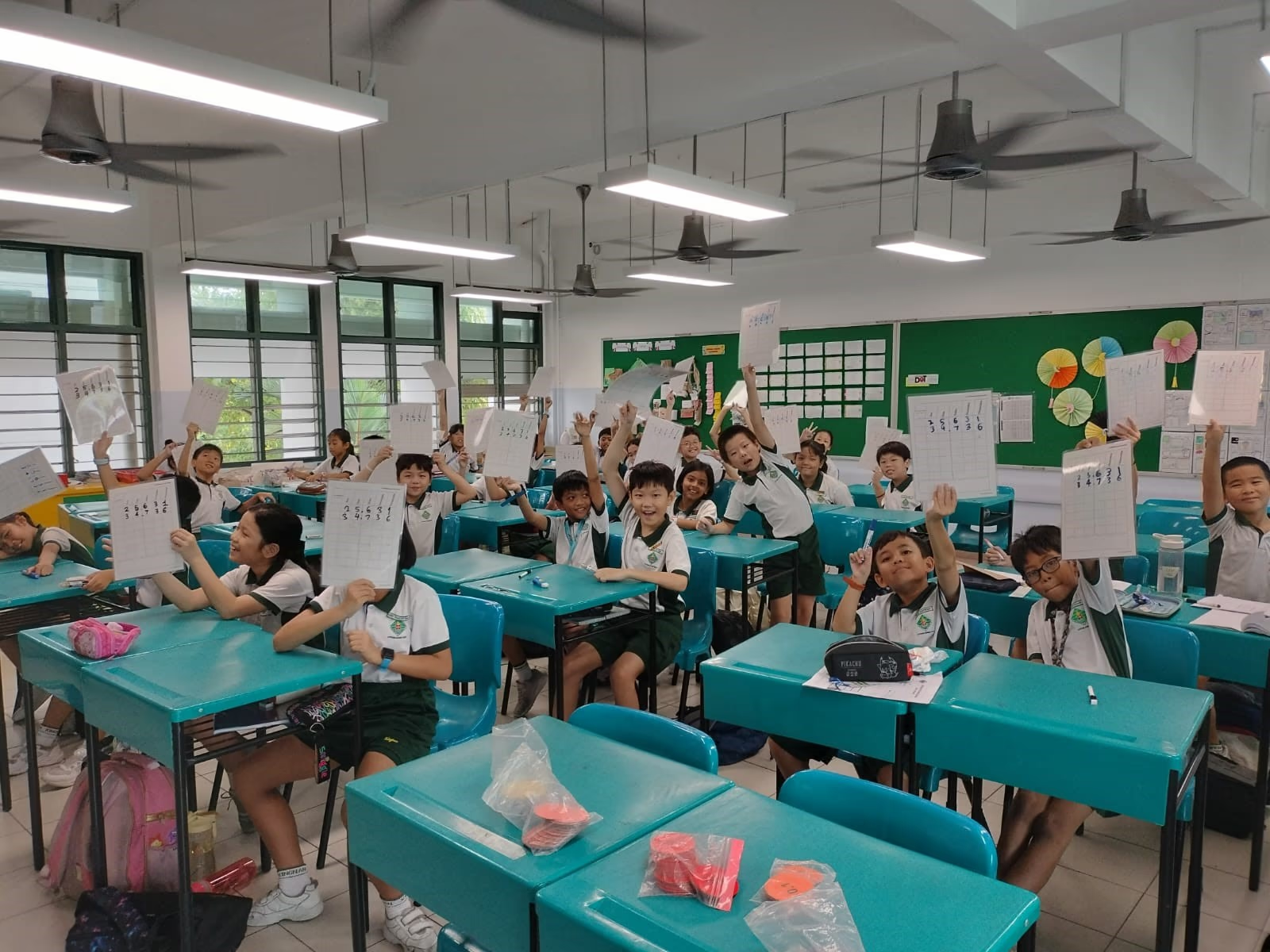
Mathematics concepts are introduced progressively through the CPA approach. Students first engage with physical manipulatives in the Concrete stage, building intuitive understanding through hands-on experience. They then move to the Pictorial stage, where visual representations help them make sense of relationships and patterns. Finally, at the Abstract stage, students work with mathematical symbols and notation with confidence, having built a strong conceptual foundation.


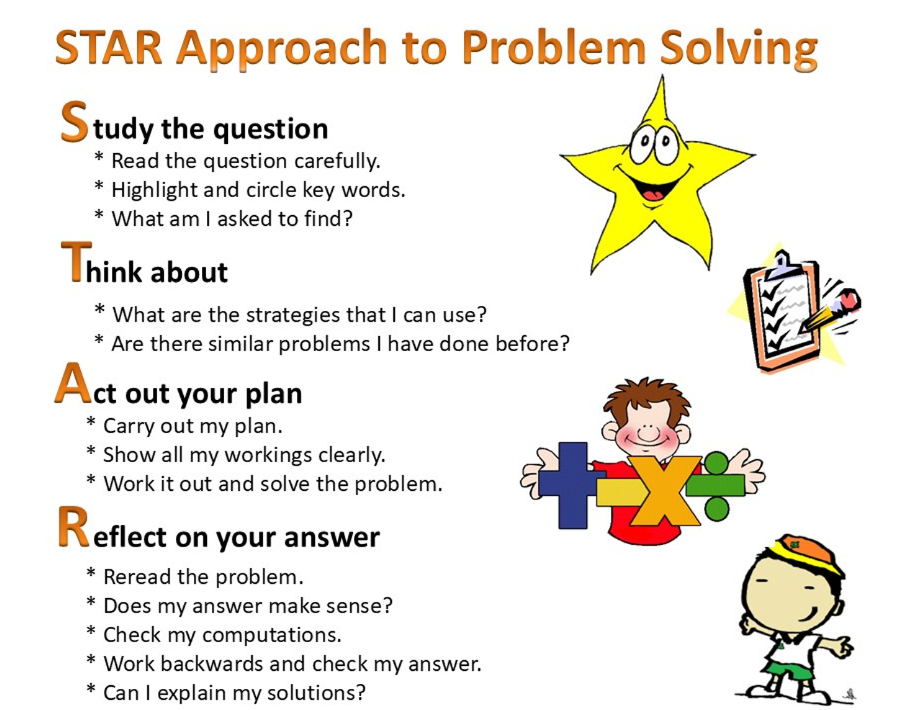
STAR Approach to Problem Solving
Aligned with Polya's four-step problem-solving model, our school uses the STAR approach to develop structured thinking habits. Students are taught to Study the question carefully, Think of a plan, Act on the plan, and Reflect on their answer. This metacognitive routine helps students become more deliberate and resilient problem solvers, skills that are central to both mathematical reasoning and 21CC.
Exploration, Communication, and Meaningful Learning
Our lessons are designed to foster inquisitiveness and collaborative thinking. Through guided exploration and discovery, students uncover mathematical concepts independently rather than receiving them passively. They are encouraged to articulate and discuss their reasoning, developing both mathematical language and communication skills. Wherever possible, concepts are connected to real-world contexts, making learning relevant and purposeful.
EdTech Integration
Technology is woven into our Mathematics lessons to enhance learning and promote self-directedness. ICT tools support experiential learning and allow students to explore concepts at their own pace, engage with interactive tasks, collaborative challenges, and receive timely feedback — building both proficiency and motivation outside the classroom.
Key Programmes
Our programmes are designed to support every student along their learning journey, from those who need foundational support to those ready for greater challenge and depth.
E2K Mathematics Programme
Selected students who demonstrate strong interest and aptitude in Mathematics are invited to join the E2K (Excellence 2000) Programme. Going beyond the standard curriculum, E2K deepens mathematical reasoning through an inquiry-based approach, engaging students with puzzles, games, and open-ended mathematical explorations. The programme cultivates the habits of mind and dispositions of mathematicians, while developing critical thinking, creative problem solving, and other important 21CC skills that prepare students for future learning.
Mathematics Expert @ Work (MEW) Programme
The Mathematics Expert @ Work (MEW) programme challenges mathematically talented students through collaborative, real-world problem solving. Students work on open-ended tasks that encourage them to explore multiple approaches, think critically, and connect abstract concepts to practical applications. Beyond problem solving, MEW also develops students' ability to communicate mathematical ideas clearly and discuss their reasoning with peers — skills that prepare them well for the complexities of the real world.
Mathematics Competitions
Students are encouraged to participate in Mathematics competitions to demonstrate their Mathematics skills and motivate them to strive for excellence in the learning of Mathematics. Some competitions students take part in include (i) Asia Pacific Mathematical Olympiad for Primary Schools; (ii) Raffles Mathematical Olympiad; and (iii) National Mathematical Olympiad of Singapore.
Learning Support in Mathematics (Primary 1 to 4)
The Learning Support in Mathematics (LSM) programme provides early intervention for Primary 1 to 4 students who would benefit from additional support in building their numeracy foundations. Conducted in smaller class settings, LSM allows teachers to give more individualised attention, helping students develop core mathematical skills and concepts at a pace that suits them. Importantly, the programme also focuses on building students' confidence and fostering positive beliefs in their own mathematical ability — because believing in oneself is the first step to growth.